

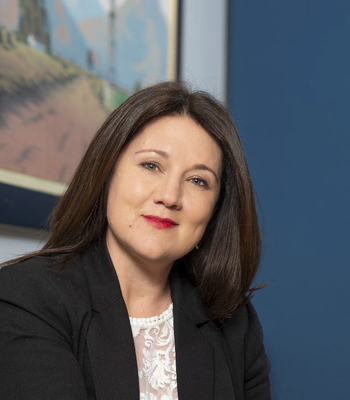
Dr Musiwalo Moses Khangale | How climate change is reshaping disaster preparedness and why insurance matters
Climate-related events dominate the disaster risk landscape, with the Centre for Research on the Epidemiology of Disasters citing that they make up more than 80% of reported disasters worldwide. South Africa is also experiencing an increase in the frequency and intensity of weather-related disasters. Government issued three notices of weather-related national disasters in the first five months of the year alone. Primarily driven by climate change, these disasters are also exacerbated by rapid urbanisation and vulnerable infrastructure.
This year’s International Day for Disaster Risk Reduction (IDDRR) theme “Resilience Starts At Home” highlights the role of the home as the frontline unit of society where our daily decisions influence how well we will be able to anticipate, withstand and recover from disaster risks. Accordingly, the United Nations Office for Disaster Risk Readiness says that “home is both where disasters are most acutely felt and where resilience must begin”. This is an important reminder that disasters don’t just destroy buildings: they destroy lives, livelihoods and futures, and that resilience starts with where and how we live.
The role of insurance
Insurance plays a critical role in household resilience by providing financial protection that enables families to recover and rebuild more quickly after a disaster. No one should have to choose between an affordable home and a safe one, which is why resilience must be understood not only as a physical requirement, but also as a financial one. Without adequate insurance, the immediate liquidity that comes with a claim payout means that repairs to property, replacing belongings and the cost of temporary living arrangements escalates quickly. During the first half of 2026 alone, Santam covered R1.5 billion in weather-related claims for policyholders, a significant jump from the R155 million in 2025 for the same period, echoing the increasing need for cover as disaster risks evolve.
Beyond recovery, insurance supports risk-informed decision-making by encouraging households to better understand their exposure and invest in preventative measures. Payouts can also support upgrading materials to disaster-resistant standards during repairs, lowering future vulnerability. This is consistent with the Build Back Better notion which aims to use post disaster response to enhance community resilience as highlighted in the Sendai Framework for Disaster Risk Reduction, 2015-2030.
Acting as a financial safety net when disasters strike, insurance also plays a role in societal resilience by ensuring that insured communities are not draining life savings, taking on heavy debt, or defaulting on mortgages after a crisis.
Building resilience requires a combination of proactive measures
In addition to insurance, household resilience requires a combination of property maintenance, emergency planning, risk awareness and access to early warning information.
From a property maintenance perspective, the latest Santam Insurance Barometer report uncovered some worrying signs of consumers neglecting important building maintenance due to financial pressures. This is concerning when one considers that in the first four years of the current decade, there have already been as many floods as in the full 10 years between 2000 and 2009. This makes it imperative that storm water infrastructure (conventional storm water infrastructure quickly drains storm water to rivers and streams) is kept clean on your property as well as in the road outside the property.
It is also crucial for households to take proactive steps to ascertain whether they are in a high-risk zone for floods or fires. Households located in a hot spot should have clear disaster action plans in place that the whole family is aware of – access to emergency supplies, knowledge of how to shut off gas, water and electricity mains, safe meeting places in case of separation, and an accessible list of emergency contacts. It’s also crucial for households to monitor and heed warnings for severe weather events in their areas, because a warning that does not reach the household, is not understood, or is not acted on is a warning that fails.
Resilience can no longer be treated as something that begins only after a crisis
Household resilience starts with practical decisions households make every day: maintaining their properties, understanding local risks, preparing for emergencies, and ensuring they have the right financial protection in place. When households are informed, prepared and included in planning, entire communities become stronger. Insurance cannot prevent extreme weather, but it can determine how quickly families recover when disaster strikes. International Day for Disaster Risk Reduction is a call to action: building resilience begins at home, but it must be supported by accessible risk protection, informed decision-making and collective action across communities, insurers and government.
*Dr Musiwalo Moses Khangale, Disaster Risk Management, at, Santam Insurance.










 Insurance Biz proudly displays the "FAIR" stamp of the Press Council of South Africa, indicating our commitment to adhere to the Code of Ethics for Print and online media which prescribes that our reportage is truthful, accurate and fair. Should you wish to lodge a complaint about our news coverage, please lodge a complaint on the Press Council's website, www.presscouncil.org.za or email the complaint to enquiries@ombudsman.org.za. Contact the Press Council on 011 4843612.
Leave a Comment